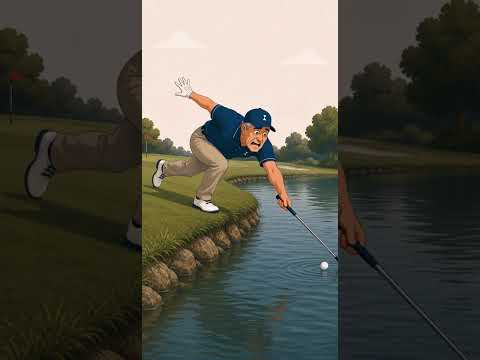
Most golfers remember their best shot far better than their actual score. It’s a well-documented pattern in golf psychology and handicap data: a single birdie or a clean drive sticks in memory, while the double bogey, the three-putt, and the lost ball fade fast. The result is a mental scorecard that looks better than the one you actually signed — and a handicap that never quite matches the story you tell about your own game.
Frank makes a birdie on 14 and brings it up the whole way to 15. He may bring it up again at the turn, and again at dinner. What he doesn’t mention: the double bogey on 6, two three-putts on the front nine, and a ball he “found” in his pocket that he definitely didn’t drop there by accident. His actual round was a 91. In his retelling, it was “a really solid day — I made a birdie.”
This isn’t dishonesty. It’s how memory works under a scoring system that rewards peaks. One great shot is vivid and story-shaped; six mediocre ones are just noise. So the birdie becomes the round, and the round becomes the identity — while the scorecard remembers something closer to the truth.
If you only remember your best shot, you’re not tracking your golf score — you’re editing it.