There’s a question almost nobody asks about golf instruction, and the silence around it is itself worth noticing: at what point should a golfer stop needing golf lessons? Not stop learning. Not stop improving. Stop needing someone else to tell them what just happened on a given golf swing.
In most areas of education, that question is unavoidable. A driving instructor’s job is to make himself unnecessary. A piano teacher’s job, eventually, is to produce a musician who can practice alone. Golf instruction, as Tony Brooks — a PGA Master Professional who teaches under the name The Golf Outlaw — points out after three decades in the business, rarely asks this question of itself. And that should make you a little suspicious of the industry, not the teachers.
His argument isn’t that golf instructors are bad people. It’s that the structure of instruction has quietly shifted from creating independence to creating dependence, and the shift happened so gradually that almost nobody noticed.
Golf instruction works best, he argues, in two specific phases: children learning coordination and feel, and brand-new adults who need orientation rather than optimization — fundamentals, boundaries, basic cause and effect. That’s real teaching, and it’s genuinely valuable. The trouble starts after that phase, when instruction stops teaching golfers how their own swing works and starts teaching them to chase positions, compare themselves to tour players, and outsource judgment to tools, numbers, and systems instead of their own understanding.
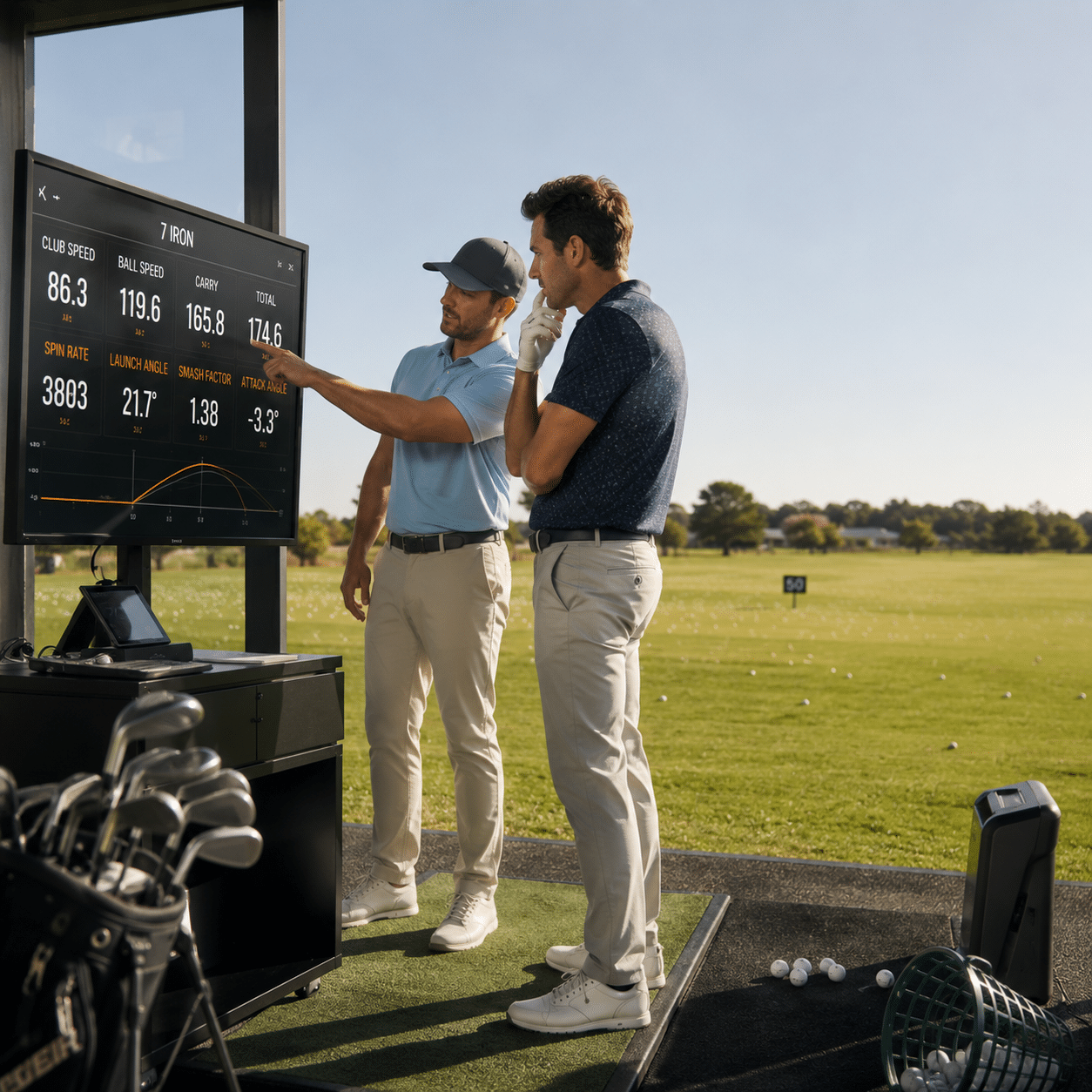
The practical result shows up at driving ranges everywhere: golf instructors with launch monitors hyper-focused on decimal points and angles most golfers can’t actually process, not because the student needs that level of detail, but because complexity sells credibility. Most golfers don’t benefit from hyper-detail. Understanding what actually matters is more useful than knowing everything about your swing — but “what matters” is a much harder thing to charge for than a stack of new numbers every week.
This connects to something GolfRealist has said before in different words: the structure of an environment shapes what gets taught, regardless of the teacher’s intentions. A weekly lesson, indefinitely, in a system that rewards ongoing engagement, will tend to produce more lessons — not because anyone is acting in bad faith, but because that’s what the structure makes easy and profitable to produce.
So how do you protect yourself as a student, without assuming every instructor is working an angle? A few warning signs are worth taking seriously. Be cautious of an instructor who sells a named, proprietary system as the answer. Be cautious if every lesson promises results by copying tour player positions rather than working with what your body actually does. Be cautious if each lesson adds complexity instead of removing it — more numbers, more positions, more things to think about, rather than fewer. And be especially cautious if an instructor can’t explain your mis-hits in simple cause and effect: “you did this, so the ball did that.” If they can’t explain it simply, that’s not a sign the problem is sophisticated. It’s often a sign the explanation is being used to keep you coming back rather than to actually teach you something.
None of this is an argument against instruction — Tony Brooks isn’t suggesting golfers fire their teaching pros, and neither is GolfRealist. Some flaws genuinely need a second pair of eyes and years of expertise to fix. The argument is about what good golf instruction is supposed to be aiming for: not a student who needs you forever, but a golfer who eventually understands their own cause and effect well enough to trust themselves between lessons.
When that happens, something practical shifts. Misses stop feeling mysterious. Golf practice gets simpler, because you’re correcting something you understand rather than chasing a position someone else told you to hold. Golf lessons become a tool you reach for occasionally, not a subscription you can’t cancel.
The best instruction, by this standard, doesn’t create better students forever. It creates golfers who eventually don’t need a teacher standing behind them to know what just went wrong — and that’s a much harder thing for an instructor to sell than another year of weekly sessions.
Source: Insights and framework drawn from a video by Tony Brooks, a PGA Master Professional, on his YouTube channel The Golf Outlaw.