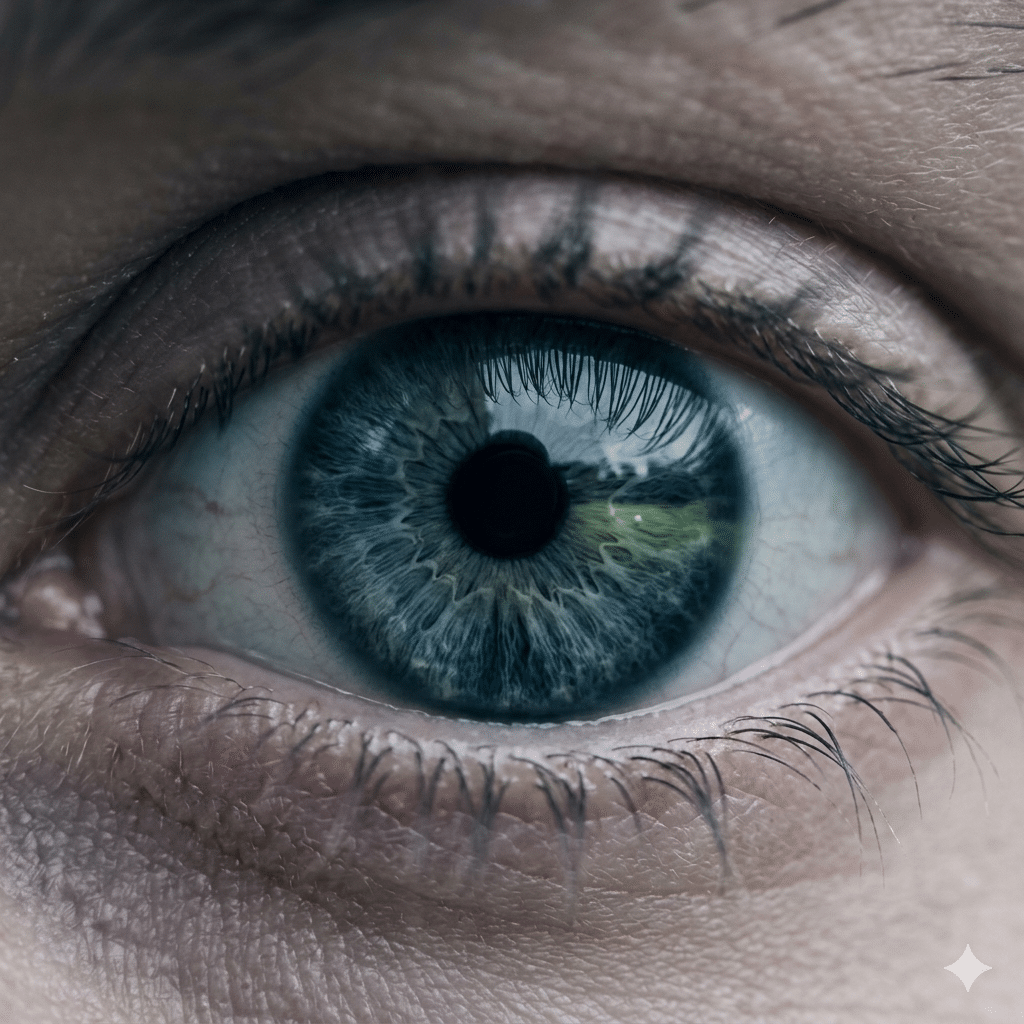
Frank has started visualizing. He read about it, the way Jack Nicklaus supposedly never hit a shot without seeing it first in his mind — a perfect little movie of the ball climbing, peaking, dropping, rolling toward the flagstick. So now, before every golf shot, Frank closes his eyes and watches his personal highlight reel. Then he opens his eyes, looks at the golf ball, looks at the target, looks back at the golf ball, adjusts his feet, looks at the target again. By the time he pulls the trigger, his eyes have done more work than his swing. The shot goes fifteen yards off line. Frank is baffled. He did everything the books said.
He did half of it. And the half he skipped is the half that actually matters.
There are two completely different things people mean when they say “visualization,” and almost all popular golf advice talks about only one of them: outcome visualization. This is the part everyone loves — picture the perfect shot, picture the ball going in, picture the trophy. It feels good, it’s motivating, and it’s almost entirely useless for actually producing the shot. Wanting something vividly is not the same as rehearsing how to do it.
The other kind, the one that barely gets mentioned, is process visualization: mentally rehearsing the actual physical sequence — the feel of the grip, the sensation of weight shifting onto the front foot, the specific tempo of the takeaway. This sounds almost boring by comparison. It’s also the version that EMG studies back up. When athletes do process visualization properly, electromyography shows the same motor regions of the brain firing, at low intensity, as when the movement is actually performed. The brain doesn’t fully distinguish between vividly rehearsing the doing and actually doing it. Outcome visualization doesn’t get anywhere near that effect, because there’s no process being rehearsed — just a result being admired in advance.
So Frank’s “visualization” was really just wishing, dressed up in language that sounded like Nicklaus. And the cost of that wishing wasn’t neutral — it actively damaged the shot, because of what happened next.
This connects to a separate, well-studied phenomenon: the quiet eye. Researcher Dr. Joan Vickers found that elite performers fixate their gaze on the ball or target for a stable two to three seconds immediately before the backswing starts. No flicking, no rechecking, no second-guessing — one steady look, then go. Amateurs, especially ones who’ve just spent several seconds imagining an outcome they’re now anxious to confirm, do the opposite. Their eyes dart — ball, target, ball, target, one more check, just to be sure. Frank’s six eye-movements in the final second before his swing weren’t nerves. They were the direct consequence of finishing his “visualization” with a result he was now unconsciously trying to verify, rather than a process he was ready to execute.
An unsteady eye in the final moment doesn’t just look anxious. It removes the stable coordinates your nervous system needs to fire the right muscles at the right time. The body doesn’t know where “there” is if the eye won’t stop checking.
Here’s the practical fix, and it requires giving something up: stop rehearsing the result, and start rehearsing the feel. Instead of watching the ball fly in your mind, feel the grip pressure, feel the turn, feel the transition. Then, when you’re done rehearsing, look at your target once, hold your eyes there for a real two to three seconds, and go — no more checking, no more confirming, no more flicking back and forth to see if your imagined outcome is still on track.
Frank will keep doing the highlight-reel version for a while, because it’s the version that feels like Nicklaus and the other one feels like nothing at all. That’s exactly the trap. The boring rehearsal is the one your nervous system actually uses. The exciting one is just a movie you watch right before you miss.
Source: Dr. Joan Vickers’ research on the “quiet eye” in elite athletes; EMG studies on process vs. outcome visualization in motor learning.